

Introduction
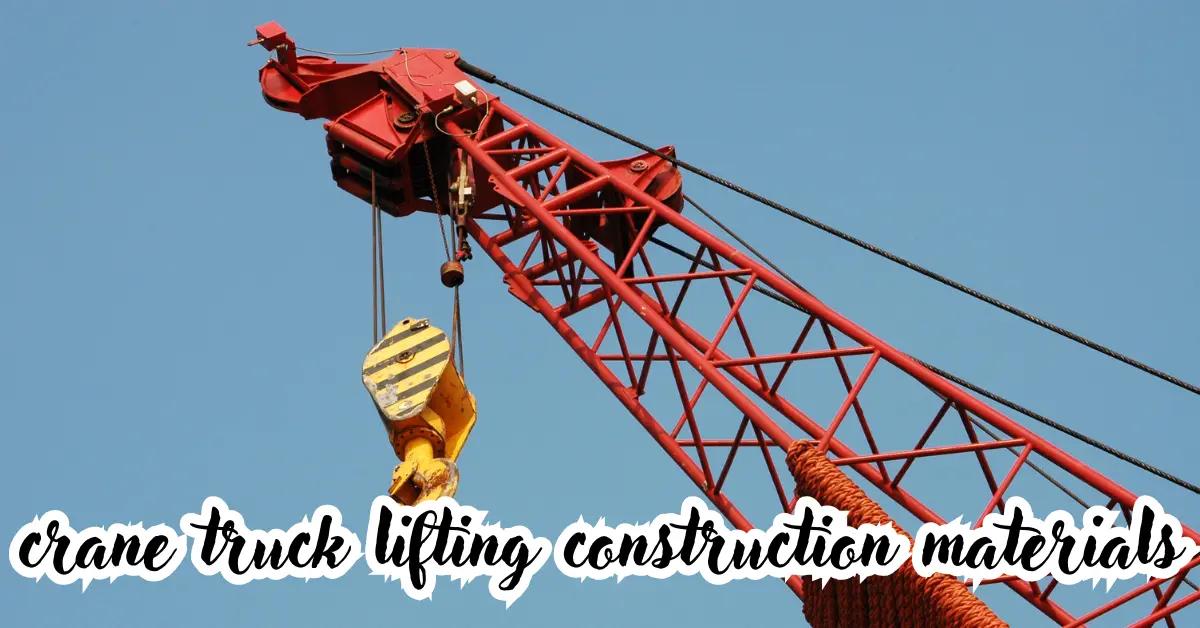
Crane truck is a commercial vehicle fitted with a crane system that can lift, move, and position heavy materials without requiring separate lifting equipment at every location. In India, these trucks are widely useful for construction, infrastructure projects, logistics, industrial maintenance, utility work, and material handling.
A crane truck combines the mobility of a truck with the lifting capability of a crane. This makes it particularly practical when heavy goods need to be transported and unloaded at different locations.
This guide explains what a crane truck is, how it works, the major types available, common applications, advantages and limitations, safety practices, maintenance requirements, and important points to consider when choosing or hiring one.
What Is a Crane Truck?

A crane truck is a truck equipped with a mounted lifting mechanism designed to load, unload, and move materials. The crane is normally installed on the truck chassis, allowing the vehicle to travel between job sites.
Unlike a conventional cargo truck, which generally needs separate equipment for lifting heavy loads, a truck-mounted crane can perform transportation and lifting operations as part of the same job.
Common components include:
- Truck chassis
- Crane boom
- Hydraulic cylinders
- Hydraulic pump and reservoir
- Outriggers or stabilizers
- Load hook
- Control system
- Mounting frame
- Counterweight or stabilization arrangement, depending on the design
The exact configuration varies according to the manufacturer’s design, truck capacity, crane capacity, and intended application.
How Does a Crane Truck Work?
A crane truck works by using the truck as the mobile platform while the mounted crane performs lifting operations. Before lifting, the vehicle is positioned on suitable ground and stabilizers are deployed where required.
The hydraulic system then powers the crane’s movement. Hydraulic cylinders help raise, lower, extend, or position the boom, while the hook and lifting accessories secure the load.
A typical lifting operation involves these steps:
- Position the truck: Park the vehicle on stable and suitable ground.
- Apply the parking brake: Secure the vehicle before crane operations begin.
- Deploy stabilizers: Extend outriggers when the crane design requires them.
- Check the load: Confirm the weight, dimensions, lifting points, and center of gravity.
- Attach lifting equipment: Use suitable slings, hooks, shackles, or other approved accessories.
- Lift gradually: Raise the load carefully without sudden movements.
- Move the load: Position it within the crane’s permitted operating area.
- Lower safely: Place the load on a prepared and stable surface.
- Retract equipment: Secure the boom and stabilizers before moving the truck.
The crane’s rated capacity is not the same at every boom position. Lifting capacity can change significantly depending on boom length, working radius, configuration, and stabilization.
Types of Crane Trucks

Different jobs require different lifting systems. The best crane truck depends on the required lifting capacity, working radius, road conditions, load type, and job-site environment.
1. Truck-Mounted Crane
A truck-mounted crane has a lifting mechanism installed directly on a commercial truck chassis.
It is suitable when the operator needs both transportation and lifting capability. These vehicles are commonly used for construction materials, equipment delivery, industrial maintenance, and general material handling.
2. Hydraulic Crane Truck
Hydraulic crane trucks use hydraulic power to control boom movement and lifting operations.
Hydraulic systems allow controlled movement and can provide strong lifting performance within the manufacturer’s rated limits. They are commonly used for construction, infrastructure, industrial, and logistics applications.
3. Knuckle Boom Crane Truck
A knuckle boom crane uses articulated boom sections that fold when the crane is not being used.
This design can be useful where compact storage and maneuverability are important. It is often used for loading and unloading materials in locations where space is limited.
4. Telescopic Crane Truck
A telescopic crane uses boom sections that extend outward, similar to a telescope.
This arrangement can provide greater reach while maintaining a relatively compact configuration when the boom is retracted. It can be useful for applications requiring lifting at different distances from the truck.
5. Heavy-Duty Crane Truck
Heavy-duty crane trucks are designed for demanding lifting operations and are generally built around higher-capacity truck chassis and crane systems.
They may be used for industrial equipment, large construction materials, infrastructure projects, and other heavy-load applications.
The exact lifting capacity must always be confirmed from the manufacturer’s load chart rather than estimated from the vehicle’s appearance or overall size.
Where Are Crane Trucks Used?
A crane truck is useful wherever heavy materials must be transported and lifted at the destination.
Construction
Construction companies can use crane trucks to handle materials such as:
- Steel components
- Construction equipment
- Pipes
- Structural materials
- Machinery
- Building materials
The truck can deliver the material and assist with unloading, reducing dependence on separate lifting equipment for suitable jobs.
Road and Infrastructure Projects
Infrastructure projects often involve equipment and materials that must be moved between locations.
Crane trucks can support road construction, utility work, bridge-related activities, and other infrastructure operations when the equipment matches the project’s lifting requirements.
Industrial Maintenance
Factories and industrial facilities may require machinery, components, and equipment to be moved during installation or maintenance.
A crane truck can be useful for loading and positioning equipment when the load and working environment fall within the crane’s approved capacity and operating conditions.
Logistics and Material Delivery
Some specialized logistics operations require more than transportation.
A truck with crane can transport goods and assist with unloading at the destination, which can be especially useful where forklifts or fixed cranes are unavailable.
Utility and Electrical Work
Utility contractors may use suitable crane-equipped vehicles for moving equipment and materials during maintenance and infrastructure projects.
However, work around electrical lines requires strict controls because crane booms and loads can create serious electrical hazards.
Benefits of Using a Crane Truck
The biggest advantage of a crane truck is that it combines transportation and lifting capabilities in one vehicle.
1. Transportation and Lifting in One Unit
Instead of arranging a truck and separate lifting equipment for every suitable job, one vehicle can perform both functions.
This can simplify logistics and reduce equipment coordination.
2. Better Job-Site Mobility
Because the crane is mounted on a truck, the equipment can travel between locations using the road network, subject to applicable vehicle regulations and operating requirements.
3. Faster Loading and Unloading
When properly planned, a crane truck can help load or unload materials without relying entirely on external lifting equipment.
4. Useful for Multiple Applications
A suitable crane truck can support construction, logistics, maintenance, infrastructure, and industrial operations.
5. Reduced Equipment Handling
Combining transportation and lifting into one operation can make material movement more straightforward for certain jobs.
Limitations of Crane Trucks
Despite their advantages, crane trucks are not suitable for every lifting operation.
Important limitations include:
- Limited lifting capacity compared with specialized heavy lifting cranes
- Reduced capacity at greater working radii
- Requirement for adequate ground stability
- Limited access in confined areas
- Potential overhead hazards
- Need for trained operators
- Weather and wind can affect lifting operations
- Vehicle size may restrict access to some locations
A crane truck should therefore be selected according to the actual lifting plan rather than simply choosing the largest-looking vehicle.
Crane Truck vs. Mobile Crane
A crane truck and a mobile crane can both perform lifting operations, but they are designed for different practical requirements.
| Feature | Crane Truck | Mobile Crane |
| Transportation | Designed to transport materials or goods | Primarily designed for lifting |
| Mobility | Good road mobility | Depends on crane type |
| Loading/unloading | Can often perform both | Usually requires separate transport arrangements |
| Job flexibility | Strong for delivery and lifting combinations | Strong for dedicated lifting |
| Best suited for | Material delivery and lifting | Larger or specialized lifting operations |
| Setup | Generally practical for suitable jobs | Can require more extensive setup |
The right option depends on the load, lifting radius, height, ground conditions, site access, and required capacity.
How to Choose the Right Crane Truck
Selecting a crane truck requires more than checking the maximum lifting capacity.
1. Determine the Load Weight
Start with the actual weight of the heaviest item that needs to be lifted.
Do not estimate weight when accurate information is available. Incorrect load calculations can create serious safety risks.
2. Check the Required Lifting Radius
Determine how far the load needs to be lifted from the crane’s center or working position.
A crane’s capacity generally changes as the working radius increases, so the manufacturer’s load chart should be checked.
3. Consider Lifting Height
If the load must be placed on a higher floor, platform, structure, or elevated location, the required boom reach and configuration must be considered.
4. Evaluate Ground Conditions
The truck needs a suitable surface for safe crane operation.
Soft, unstable, sloped, or uneven ground can create significant risks, particularly when outriggers are deployed.
5. Check Site Access
Consider:
- Road width
- Turning space
- Entrance height
- Overhead structures
- Power lines
- Ground clearance
- Parking and setup space
A crane with sufficient capacity may still be unsuitable if the truck cannot safely reach or position itself at the site.
6. Review the Load Chart
The load chart is one of the most important documents for crane selection.
It indicates permitted lifting capacities under different boom lengths, working radii, configurations, and stabilization conditions.
7. Consider the Truck’s Payload
The truck must be capable of safely carrying the intended load while remaining within its permitted vehicle and axle limits.
The crane’s lifting capacity and the truck’s payload capacity are separate considerations.
Crane Truck Safety Tips
Safe crane operation requires proper planning, trained personnel, suitable equipment, and compliance with applicable requirements.
Inspect Before Operation
Before use, inspect relevant components such as:
- Hydraulic hoses
- Crane structure
- Boom
- Hook and lifting accessories
- Safety devices
- Outriggers
- Tires
- Brakes
- Controls
- Visible signs of damage or leakage
Any serious defect should be addressed before lifting.
Never Exceed Rated Capacity
The operator should never exceed the crane’s rated capacity for the actual operating configuration.
Capacity depends on more than the crane’s headline maximum rating.
Keep People Away From Suspended Loads
Workers and other people should not stand beneath suspended loads or unnecessarily enter hazardous lifting areas.
Watch for Overhead Hazards
Before raising or extending the boom, check for:
- Electrical lines
- Buildings
- Trees
- Bridges
- Poles
- Other structures
Electrical hazards require particularly careful planning and appropriate controls.
Use Suitable Lifting Accessories
Slings, hooks, shackles, and other lifting accessories should be appropriate for the load and inspected according to applicable requirements.
Avoid Sudden Movements
Smooth, controlled crane movements help reduce unnecessary load swing and equipment stress.
Crane Truck Maintenance Checklist
Regular maintenance helps identify problems before they become major failures.
A practical maintenance program should include:
- Checking hydraulic fluid and visible leaks.
- Inspecting hoses and fittings.
- Checking the boom and structural components.
- Inspecting hooks, slings, and lifting accessories.
- Checking tires and brakes.
- Inspecting outriggers and stabilizer components.
- Testing controls and safety devices.
- Following the manufacturer’s service schedule.
- Recording inspections and repairs.
- Removing damaged equipment from service until properly evaluated.
Maintenance intervals should follow the manufacturer’s instructions and the applicable requirements for the equipment.
Common Crane Truck Mistakes to Avoid
Several mistakes can make lifting operations unnecessarily dangerous or inefficient.
Choosing Equipment Based Only on Maximum Capacity
A crane rated for a particular maximum load may not be capable of lifting that load at every radius or boom configuration.
Always check the relevant load chart.
Ignoring Ground Conditions
Even a correctly rated crane can become unsafe if the vehicle is positioned on unsuitable ground.
Underestimating Site Access
The truck needs enough space not only to enter the site but also to position and stabilize safely.
Skipping Pre-Operation Checks
Small hydraulic leaks, damaged accessories, or equipment defects should not be ignored.
Allowing Untrained Personnel to Operate the Crane
Crane operation requires appropriate training, competence, and authorization. Employers should follow applicable occupational safety requirements and manufacturer instructions.
Crane Truck Hire or Purchase: Which Is Better?
The answer depends on how frequently the equipment is required.
Hiring is often practical when a company needs a crane truck occasionally or for a short-term project. It can avoid the long-term costs associated with ownership, maintenance, storage, and fleet management.
Purchasing may make sense for businesses that have regular lifting and transportation requirements and can properly manage maintenance, operators, inspections, insurance, and compliance.
Before deciding, compare:
- Frequency of use
- Project duration
- Required capacity
- Operator availability
- Maintenance costs
- Storage requirements
- Insurance
- Regulatory requirements
- Expected equipment life
Crane Truck Regulations and Safe Operation in India
Crane truck operators and businesses in India should pay attention to both road-vehicle requirements and workplace lifting safety.
Requirements can vary according to the vehicle, crane configuration, location, application, and type of work. Businesses should verify current requirements with the appropriate authorities and qualified safety professionals before operating specialized lifting equipment.
For occupational safety information and government resources, the Directorate General Factory Advice Service & Labour Institutes (DGFASLI) is a useful authoritative reference for workplace safety matters in India.
For road-related requirements, operators should also verify applicable rules and documentation with the relevant transport authorities.
Tips for Getting Better Results From a Crane Truck
For efficient and safe operations, plan the lift before the truck arrives.
A good preparation checklist includes:
- Confirm the exact load weight.
- Identify the load’s lifting points.
- Measure the required lifting distance.
- Determine the required lifting height.
- Inspect the route to the job site.
- Identify overhead obstacles.
- Check ground conditions.
- Confirm the crane’s load chart.
- Ensure suitable lifting accessories are available.
- Use trained and authorized personnel.
- Establish a safe working zone.
- Follow the manufacturer’s operating instructions.
Good planning can prevent delays and help ensure that the equipment selected actually matches the job.
If you are looking for more information about commercial vehicles and truck maintenance, explore our truck mechanic services, truck maintenance guide, and mobile truck repair services. These resources can help you understand vehicle maintenance, repairs, and practical solutions for keeping commercial trucks in reliable working condition.
For additional safety and workplace guidance related to lifting equipment, readers can also refer to the Ministry of Labour & Employment, Government of India. Always verify current safety requirements, equipment specifications, and applicable regulations before operating a crane truck or other lifting equipment.
Frequently Asked Questions About Crane Trucks
What is a crane truck used for?
A crane truck is used to transport and lift materials using a crane mounted on the vehicle. Common applications include construction, infrastructure work, industrial maintenance, equipment delivery, and material handling. The truck can be especially useful when materials need to be delivered and unloaded at locations where separate lifting equipment may not be readily available.
What is the difference between a crane truck and a normal truck?
A normal truck is primarily designed to transport cargo, while a crane truck includes an integrated lifting system. The crane allows the vehicle to load, unload, or position suitable materials within its rated operating limits. This combination can make a crane truck useful for jobs requiring both transportation and lifting.
How much can a crane truck lift?
The lifting capacity depends on the crane model, truck configuration, boom length, working radius, stabilization arrangement, and other operating conditions. There is no single capacity that applies to every crane truck. Always check the manufacturer’s load chart and ensure the planned lift remains within the permitted capacity for the actual configuration.
Is a crane truck suitable for construction work?
Yes, crane trucks are widely suitable for many construction-related material-handling tasks. They can transport and lift items such as steel components, pipes, machinery, and construction materials. However, the truck must have adequate capacity, reach, and site access for the specific task, and lifting operations should be properly planned and controlled.
Should I hire or buy a crane truck?
Hiring can be more practical for occasional or short-term projects, while purchasing may be suitable for businesses that use crane trucks regularly. The decision should consider utilization, maintenance, operators, insurance, storage, compliance, and the required lifting capacity. Comparing total ownership costs with expected hiring costs can help determine the better option.
Conclusion
A crane truck combines road transportation with lifting capability, making it a practical solution for many construction, logistics, infrastructure, utility, and industrial applications. Its biggest advantage is the ability to transport materials and perform suitable lifting operations with one vehicle.
However, choosing the correct crane requires careful attention to load weight, working radius, lifting height, ground conditions, site access, truck payload, and the manufacturer’s load chart. Safety should always come before speed or convenience.
If you are planning to buy or hire a crane truck in India, start by identifying the heaviest load, required lifting radius, lifting height, job-site conditions, and frequency of use. Then compare suitable equipment based on its verified specifications rather than its appearance or advertised maximum capacity.
