

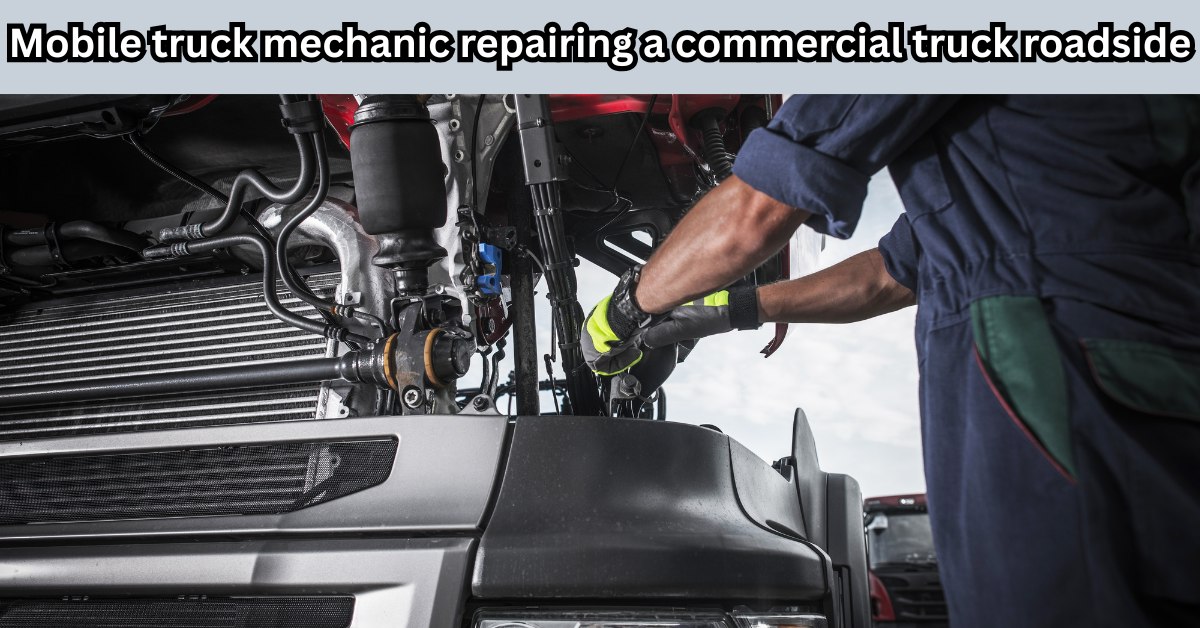
Mobile truck mechanic services provide on-site diagnosis, maintenance, and repair for commercial trucks that cannot easily reach a workshop. Instead of towing a broken-down truck to a garage, a mobile mechanic can travel to the vehicle’s location with tools, diagnostic equipment, and commonly required replacement parts.
For Indian truck operators, fleet owners, logistics companies, and independent drivers, roadside mechanical support can be particularly useful when a vehicle develops a problem during a long-distance trip. This guide explains what a mobile truck mechanic does, which problems can be repaired on-site, the benefits and limitations of mobile repairs, how to choose a reliable service, and what to do during a truck breakdown.
What Is a Mobile Truck Mechanic?
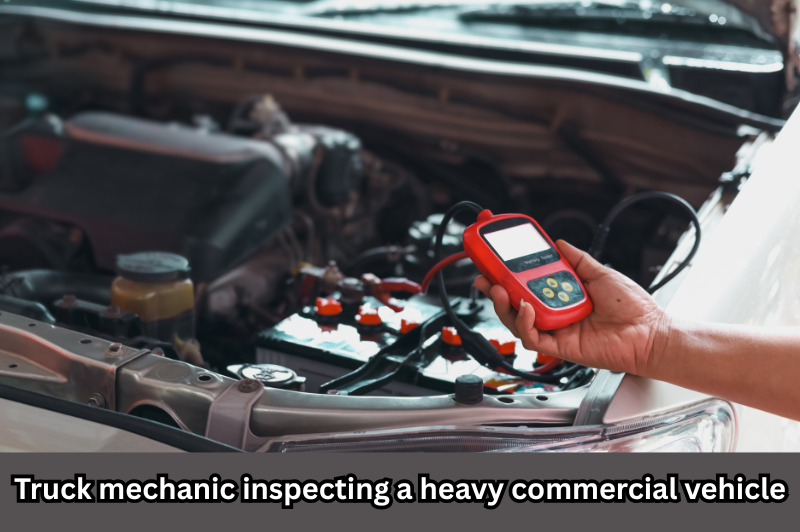
A mobile truck mechanic is a trained commercial-vehicle technician who travels to a truck’s location to inspect, diagnose, maintain, or repair the vehicle.
Unlike a traditional workshop mechanic, a mobile technician does not require the truck to be brought into a garage for every type of repair. Depending on the problem, the mechanic may work at a roadside location, parking area, fleet yard, warehouse, construction site, or other suitable location.
Common services can include:
- Truck engine diagnostics
- Battery and electrical repairs
- Brake inspection and repairs
- Starter and alternator troubleshooting
- Cooling-system repairs
- Belt and hose replacement
- Fuel-system troubleshooting
- Air-system repairs
- Basic suspension repairs
- Preventive maintenance
- Emergency roadside assistance
The exact services available depend on the mechanic’s equipment, experience, vehicle type, and the severity of the problem.
Why Do Truck Owners Need Mobile Repair Services?
A truck breakdown can interrupt deliveries, affect schedules, and leave a commercial vehicle unavailable for work. A mobile repair service can bring technical assistance directly to the truck rather than requiring immediate towing.
For example, imagine a goods truck traveling between Delhi and Jaipur that develops a starting problem at a roadside stop. If the issue is caused by a weak battery connection, starter problem, or another repair that can safely be completed on-site, a mobile truck mechanic may diagnose the fault and restore the vehicle without taking it to a full workshop.
Mobile repair is especially useful for:
- Long-haul trucks
- Delivery vehicles
- Construction trucks
- Heavy commercial vehicles
- Fleet vehicles
- Agricultural transport vehicles
- Trucks operating away from major cities
- Vehicles experiencing unexpected roadside problems
Common Services Offered by a Mobile Truck Mechanic
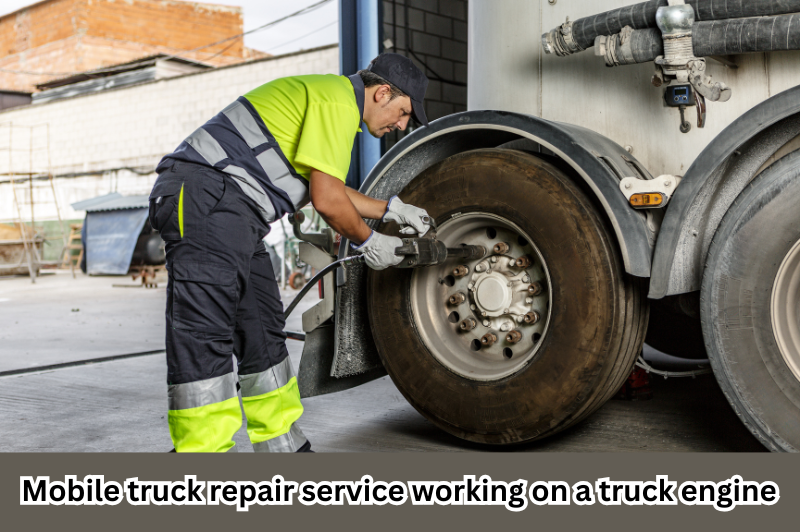
A good mobile truck mechanic can handle many routine and emergency jobs. However, major engine, transmission, chassis, or structural repairs may still require a properly equipped workshop.
Engine Diagnostics and Repairs
Engine problems can range from minor sensor faults to serious mechanical failures. A mobile technician may inspect the engine, check warning lights, scan electronic control systems where applicable, and identify obvious mechanical problems.
Depending on the diagnosis, the mechanic may help with:
- Engine starting problems
- Overheating
- Oil leaks
- Belt problems
- Hose failures
- Sensor-related faults
- Fuel delivery issues
- Basic engine adjustments
If the engine has suffered major internal damage, the truck may need to be transported to a workshop.
Battery, Starter, and Alternator Service
Electrical problems are common reasons for commercial vehicles to stop operating.
A mobile mechanic may inspect:
- Battery condition
- Battery terminals
- Charging system
- Starter motor
- Alternator
- Wiring and connections
- Fuses and related electrical components
A professional diagnosis is important because replacing a battery does not necessarily solve a starting problem if the actual fault is in the starter or charging system.
Brake Inspection and Repair
Brakes are among the most important safety systems on any commercial truck.
A mobile mechanic may inspect brake components and identify issues involving brake adjustment, air systems, brake lines, or other accessible components depending on the truck.
Brake problems should never be ignored simply because the truck is still moving. If braking performance is significantly reduced, the vehicle should be kept stationary until it has been inspected and declared safe to operate.
Cooling-System Repairs
Heavy trucks can experience cooling-system problems, particularly when operating under demanding loads or in hot conditions.
A mobile technician may inspect:
- Coolant level
- Radiator condition
- Hoses
- Belts
- Cooling fans
- Leaks
- Thermostat-related symptoms
- Signs of overheating
If a truck is overheating, continuing to drive can turn a relatively manageable issue into serious engine damage.
Air-System and Pneumatic Repairs
Many commercial trucks use compressed-air systems for important vehicle functions. Air leaks or pressure problems can affect vehicle operation.
A technician may inspect accessible air lines, fittings, valves, and related components to identify the source of a problem.
The repair requirements vary substantially depending on the truck model and the affected system.
Preventive Truck Maintenance
A mobile mechanic is not only useful when a truck has already broken down.
Some technicians also provide scheduled maintenance at fleet yards, depots, or other convenient locations. Preventive maintenance may include inspections and servicing based on the vehicle manufacturer’s recommendations and operating conditions.
Regular checks can help identify developing issues before they cause an unexpected breakdown.
Mobile Truck Mechanic vs. Traditional Truck Workshop
Both options have an important role. The right choice depends on the type of problem.
| Factor | Mobile Truck Mechanic | Truck Workshop |
|---|---|---|
| Location | Comes to the truck | Truck travels to workshop |
| Emergency breakdowns | Highly suitable | May require towing |
| Minor repairs | Often suitable | Suitable |
| Routine maintenance | Often available | Widely available |
| Major engine overhaul | Usually limited | Better suited |
| Heavy equipment | Depends on technician | Usually more available |
| Downtime | Can be reduced for suitable repairs | May involve towing and workshop intake |
| Best use | Roadside and on-site problems | Complex and major repairs |
The most practical approach is not to choose one exclusively. Fleet operators can use mobile services for suitable roadside or on-site work and established workshops for major repairs.
Benefits of Hiring a Mobile Truck Mechanic
1. Repairs Come to Your Location
The biggest advantage is convenience. Instead of arranging immediate towing, a technician can inspect the truck where it has stopped.
2. Potentially Less Downtime
When a problem is repairable on-site, the truck may return to operation faster than it would through a tow-and-workshop process.
However, repair time depends on the problem, parts availability, traffic, location, weather, and technician availability.
3. Useful for Remote Locations
Trucks frequently travel beyond major urban areas. A mobile mechanic can be particularly valuable when a vehicle develops a problem far from the fleet’s normal workshop.
4. Convenient Fleet Maintenance
Fleet owners can arrange maintenance at a depot or parking facility instead of moving several vehicles to a workshop individually.
5. Reduced Need for Immediate Towing
If a qualified technician determines that the vehicle can be safely repaired on-site, towing may not be necessary.
6. Practical for Commercial Operators
For businesses that depend on trucks for deliveries, construction, logistics, or transportation, having access to roadside repair support can make breakdown response more organized.
What Can a Mobile Truck Mechanic Repair On-Site?
A mobile mechanic can often handle problems that are accessible with portable tools and equipment.
Suitable examples may include:
- Battery replacement
- Starter troubleshooting
- Alternator-related repairs
- Electrical diagnosis
- Hose replacement
- Belt replacement
- Minor coolant-system repairs
- Some brake-system repairs
- Basic fuel-system troubleshooting
- Diagnostic scanning
- Preventive maintenance
However, the mechanic may recommend workshop repair when the truck requires:
- Major engine rebuilding
- Extensive transmission work
- Severe chassis repair
- Complex machining
- Major bodywork
- Specialized equipment unavailable on the service vehicle
A responsible technician should not attempt an unsafe roadside repair simply to avoid towing.
How to Find a Reliable Mobile Truck Mechanic in India
Finding a technician is easy; finding a reliable mobile truck mechanic is more important.
1. Confirm the Truck Type
Before calling, provide the mechanic with:
- Truck manufacturer
- Model
- Approximate model year
- Engine type if known
- Current location
- Description of the problem
These details can help the technician prepare the appropriate tools and parts.
2. Explain the Symptoms Clearly
Instead of saying only “the truck is not working,” explain what happened.
For example:
The truck started normally in the morning, but after stopping for 20 minutes, the starter turns slowly and the dashboard lights become weak.
Specific information can make diagnosis more efficient.
3. Ask About Service Coverage
Not every mobile mechanic covers every city, highway, or rural area. Confirm that the technician can reach your location before relying on the service.
4. Ask for an Estimated Cost
Request information about:
- Call-out or travel charges
- Labour charges
- Diagnostic fees
- Replacement parts
- Emergency or after-hours charges
The final amount can change if the initial diagnosis reveals additional problems.
5. Check Experience With Commercial Vehicles
A technician experienced with passenger cars may not necessarily have the tools or knowledge required for heavy commercial trucks.
Ask whether the mechanic regularly works with trucks similar to yours.
6. Verify Parts and Warranty Policies
If a replacement part is required, ask whether the mechanic uses genuine, OEM, or compatible aftermarket parts and whether any warranty applies.
The correct choice depends on the vehicle, component, manufacturer requirements, budget, and operating conditions.
What to Do When Your Truck Breaks Down on the Road
Safety should come before repair.
Step 1: Move to a Safe Position
If the truck can be moved safely, get it away from moving traffic and onto a suitable shoulder, parking area, or other safe location.
Step 2: Use Appropriate Warning Measures
Follow applicable road-safety requirements and use warning devices where appropriate. Avoid standing unnecessarily close to moving traffic.
Step 3: Turn Off the Engine When Necessary
If you notice severe overheating, smoke, unusual mechanical noise, major fluid leakage, or another potentially dangerous condition, do not continue operating the truck simply to reach a workshop.
Step 4: Contact a Qualified Technician
Provide the truck details and your exact location.
Step 5: Explain What Happened
Tell the mechanic:
- When the problem started
- What the truck was doing at the time
- Whether warning lights appeared
- Whether the engine stopped suddenly
- Whether unusual sounds or smells were noticed
- Whether the truck recently received maintenance
Step 6: Follow the Technician’s Safety Advice
Do not attempt complicated roadside repairs without proper knowledge and equipment.
How Much Does a Mobile Truck Mechanic Cost?
The price of mobile truck repair varies significantly. There is no single reliable nationwide rate because charges depend on location, truck type, repair complexity, parts, travel distance, time of service, and whether the job is an emergency.
Before approving work, ask for a clear estimate covering:
- Travel or call-out charge
- Inspection or diagnostic fee
- Labour
- Replacement parts
- Taxes or other applicable charges
- Emergency or after-hours fees, if applicable
A low initial quote is not necessarily the cheapest option if the technician uses unsuitable parts or does not properly diagnose the underlying problem.
Limitations of Mobile Truck Repair
Mobile repair is useful, but it is not a replacement for every workshop.
Limited Equipment
A roadside service vehicle cannot carry every piece of heavy workshop equipment.
Parts Availability
The required replacement component may not be immediately available, especially for less common truck models.
Complex Repairs
Major engine, gearbox, differential, chassis, or structural repairs often require specialized workshop equipment.
Working Conditions
Roadside repairs can be affected by traffic, weather, poor lighting, uneven surfaces, and restricted space.
Safety Restrictions
Some repairs should not be attempted at the roadside if the location is unsafe or the vehicle cannot be properly secured.
A professional mobile mechanic should recognize these limitations and recommend towing when necessary.
Common Mistakes Truck Owners Should Avoid
Ignoring Warning Signs
Small issues can become expensive failures if ignored. Warning lights, overheating, unusual sounds, fluid leaks, and starting problems deserve attention.
Continuing to Drive an Unsafe Truck
Trying to reach the next city can increase damage or create a serious road-safety risk.
Choosing Only by Price
The cheapest mechanic is not always the best choice. Experience, diagnosis, parts quality, response time, and workmanship also matter.
Giving Incomplete Information
A mechanic arriving without the necessary tools or parts can delay the repair. Provide as much vehicle information as possible before the technician travels.
Using Incorrect Replacement Parts
Commercial trucks have demanding operating requirements. Components should be suitable for the specific vehicle and application.
Mobile Truck Repair for Fleet Operators
Fleet managers can benefit from maintaining a relationship with dependable mobile repair providers before an emergency occurs.
A practical fleet maintenance plan can include:
- Regular vehicle inspections
- Preventive maintenance schedules
- Driver-reported defect procedures
- Breakdown-response contacts
- Maintenance records
- Approved repair providers
- Parts and warranty documentation
Fleet operators should also follow the truck manufacturer’s maintenance recommendations and applicable transport regulations.
When your truck develops an unexpected problem, a reliable truck repair service can help diagnose and resolve mechanical issues efficiently. For regular maintenance, you can also explore our truck maintenance guide to learn about inspections, servicing, and common truck problems. For official road transport and vehicle safety information in India, visit the Ministry of Road Transport & Highways (MoRTH). Combining preventive maintenance with access to a dependable mobile truck mechanic can help truck owners respond more effectively to unexpected roadside problems.
Trusted Reference for Truck Safety and Maintenance
For official road-transport information, vehicle owners and operators in India can refer to the Ministry of Road Transport & Highways (MoRTH). For specific maintenance procedures, safety requirements, and service intervals, always consult the truck manufacturer’s documentation as well.
Frequently Asked Questions
1. What does a mobile truck mechanic do?
A mobile truck mechanic travels to the truck instead of requiring the vehicle to be taken to a workshop. Depending on the equipment and problem, the technician may diagnose electrical faults, starting problems, cooling issues, brake concerns, belts, hoses, and other mechanical problems. Complex repairs may still require transportation to a properly equipped workshop.
2. Can a mobile mechanic repair a truck on the highway?
Yes, a mobile mechanic can sometimes repair a truck at or near its roadside location, provided the location is safe and the problem is suitable for mobile repair. Minor electrical, battery, hose, belt, and diagnostic issues may be manageable. Major mechanical failures may require towing to a workshop.
3. How do I choose a good mobile truck mechanic?
Look for a technician with commercial-truck experience, appropriate diagnostic equipment, clear pricing, suitable replacement parts, and good local reputation. Before dispatch, provide the truck model, location, symptoms, and any warning lights. Ask about travel charges, labour, parts, and warranty terms.
4. Is mobile truck repair cheaper than towing to a workshop?
It can be more economical when the issue is repairable on-site because the truck may not need towing. However, mobile service is not automatically cheaper. Travel distance, emergency charges, labour, parts, and the complexity of the repair all affect the final cost. Compare the complete estimated cost before authorizing work.
5. When should a truck be towed instead of repaired roadside?
A truck should generally be towed when the problem cannot be safely or properly repaired at the location. Major engine or transmission failures, severe structural damage, unsafe roadside conditions, or repairs requiring specialized workshop equipment are common reasons. A qualified mechanic should assess whether roadside repair is appropriate.
Conclusion: Choosing the Right Mobile Truck Mechanic
A mobile truck mechanic can provide valuable roadside assistance when a commercial vehicle develops a mechanical or electrical problem away from a workshop. From battery and starting issues to diagnostics, cooling-system problems, and selected maintenance tasks, mobile repair can save time when the job is suitable for on-site service.
The key is to choose a qualified technician with commercial-truck experience, explain the symptoms accurately, confirm pricing before work begins, and prioritize safety at the breakdown location.
If your truck operates regularly on highways or in areas far from your main workshop, establish contact with a dependable mobile repair provider before an emergency occurs. Keep the mechanic’s contact details, truck information, and basic maintenance records readily available so you can respond quickly when a problem arises.
